Time for lunch and the odd wrong turn
Drive times, daylight, ferries and jet lag all count. A short line on a map can still take most of the day.
Practical Ireland trip planning
Straight answers on how long to stay, when a car is worth it, and what to leave out. The aim is a good trip—not a heroic amount of driving.
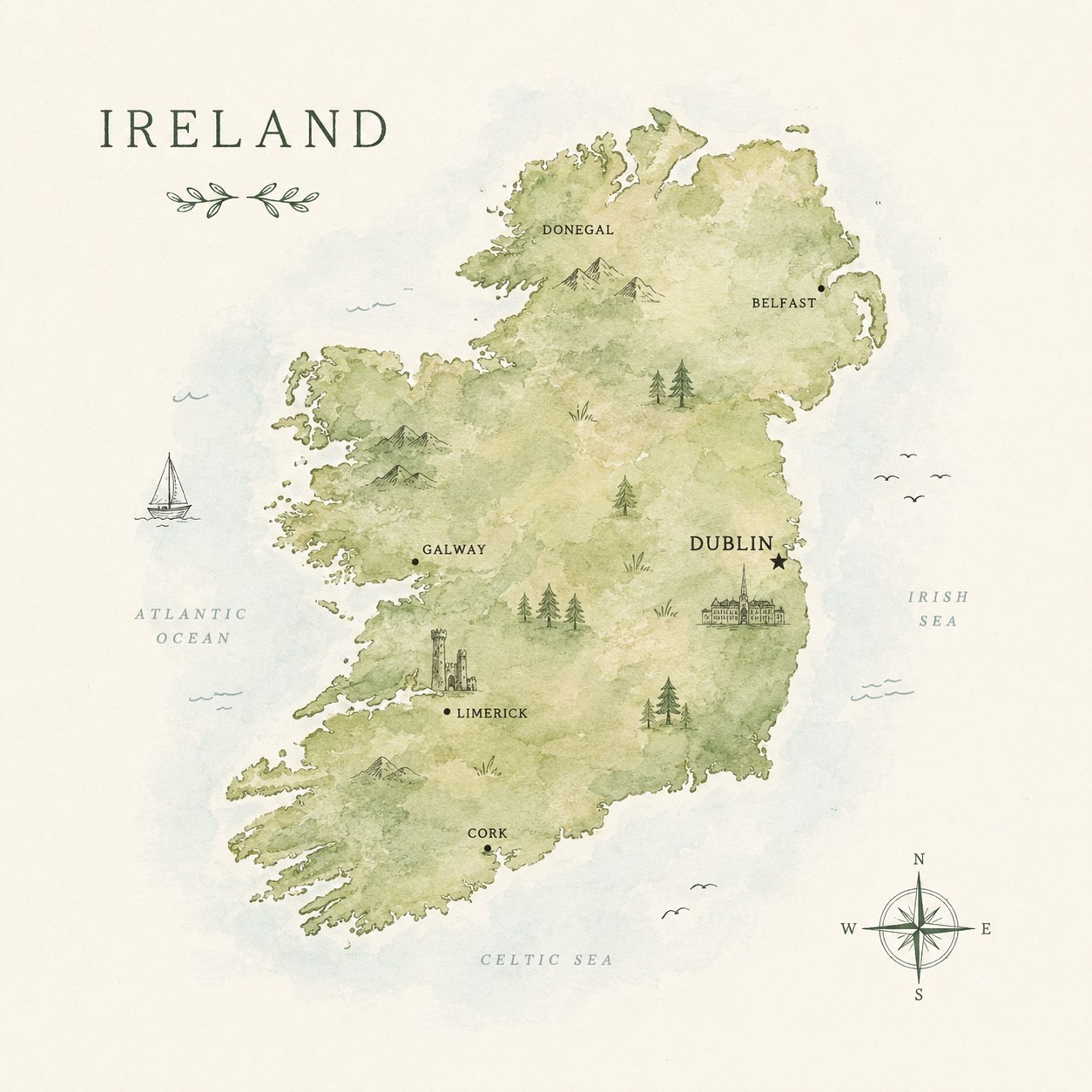
Drive times, daylight, ferries and jet lag all count. A short line on a map can still take most of the day.
Dublin is easier without one. Rural Kerry, Clare and Achill are where the freedom can be worth the bother.
Island, cliff and coast days need a sensible swap. You should not have to rebuild the trip when the forecast turns.
Free planning guides
Start with the decision in front of you. There is no need to read the whole site before booking a flight or choosing a base.
Wild Atlantic Way
Cliffs, islands, small towns and Atlantic roads are better when every stop is not a race against check-in.
Inis Oírr
Achill
Kerry
A three-stop sample
The full free page has the detail. This is the bit to remember when you land tired: get into town, keep the route compact and leave yourself an indoor escape.
An airport coach is grand when it drops you nearby. With children, heavy bags or a long walk at the far end, a taxi may be money well spent.
Walk first. Only use a timed ticket today if the flight was kind and you know you will make it without watching the clock.
St Stephen’s Green if it is holding, the National Gallery or Chester Beatty if it turns, then dinner near where you already are.
Entry and UK connections
Rules change. These notes were checked on 13 July 2026; use the official links again before you travel.
U.S. citizens can normally visit Ireland without a visa for up to 90 days. Entry is still decided at the border, so keep your stay and onward plans handy.
Current U.S. guidanceU.S. visitors generally need a UK ETA to enter the UK, including Northern Ireland. Some airside connections are exempt; check the route with the airline.
Current UK ETA rulesAn Ireland trip combined with France, Spain or Italy involves a separate border system. Check both sets of rules rather than treating it as one entry.
U.S. Europe guidancePaid route guides—only if you need them
Use the free guides first. These are three independent route guides, not one 20-day itinerary: a 4-day Dublin plan, a 6-day western route and a 7-day Cork-and-Kerry route. Each is €5, or €10 for all three.
4-day route guide · €5
DublinFor a light first day followed by three fuller Dublin days, with nearby bookings grouped together.
6-day route guide · €5
The WestFor deciding between Galway and Doolin, protecting a ferry day, and adding Mayo only when the route has room.
7-day route guide · €5
Cork + KerryFor choosing a train-friendly start, one big Kerry drive, and a Dingle stay that is not squeezed into an afternoon.
Optional paid route guides
The free planning pages are meant to be useful on their own. The paid guides are for travellers who want the day-by-day detail, map links and backups together on one phone-friendly page.
Questions before or after buying? guides@contact.howtoireland.ie