Good fit
Confident drivers, couples who can share navigation, families who need luggage flexibility, and travelers doing rural Kerry, Clare, Connemara, or Achill.
Driving and transport
Driving in Ireland is possible for many Americans, but the challenge is not just "left side of the road." It is left-side driving plus narrow rural roads, roundabouts, stone walls, wet weather, unfamiliar signage, and the temptation to do too much in one day.
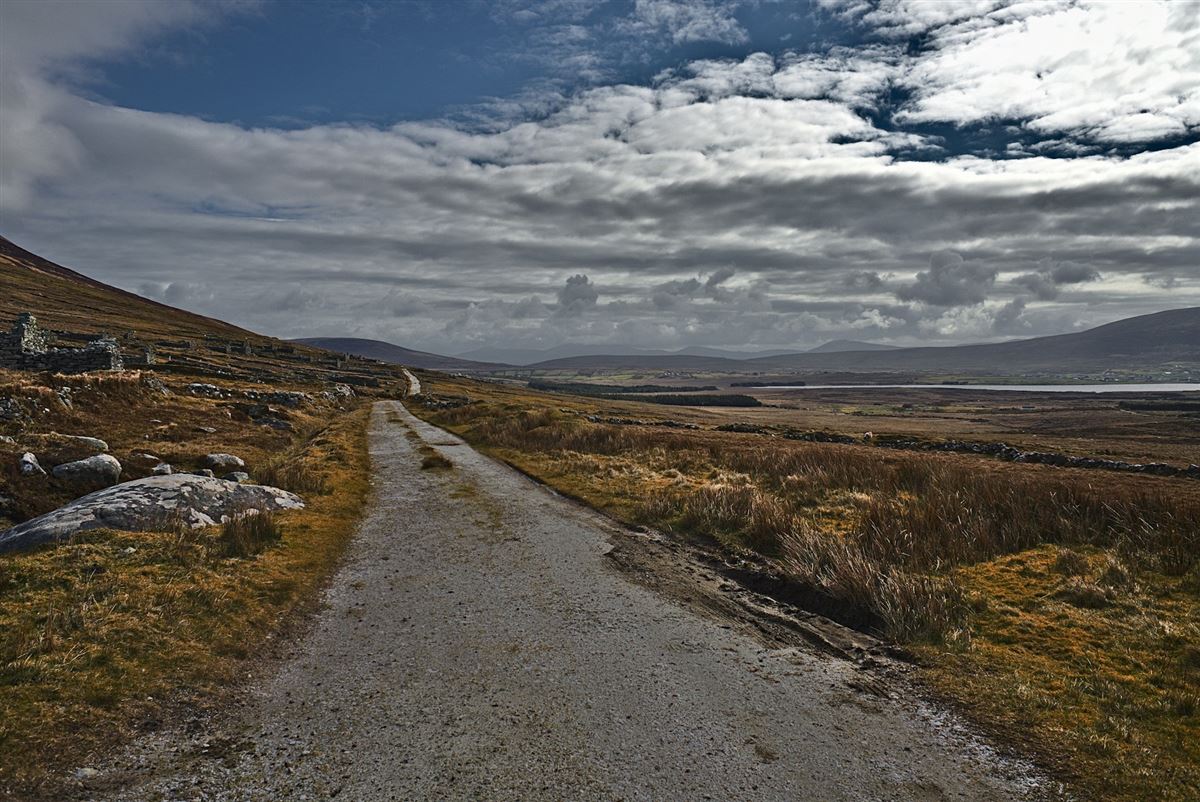
What the first hour feels like
Many Americans can drive in Ireland successfully if they skip Dublin driving, book an automatic if needed, pick up the car after the city stay, and keep the first rural day simple. The harder parts are narrow roads, meeting oncoming traffic calmly, handling roundabouts, and staying sharp late in the day.
Reality check
| Adjustment point | Why it catches people out | Best fix |
|---|---|---|
| Left-side driving | The habit slips most when turning, leaving parking lots, or starting again after a stop. | Use a calm first day and let the passenger help with reminders. |
| Roundabouts | You have less time to process lane choice and exits when everything feels reversed. | Slow down early and let navigation audio call the exit before you enter. |
| Narrow rural roads | The roads can feel tighter than U.S. visitors expect, especially with hedges or stone walls. | Lower your pace and do not try to prove you are comfortable. |
| Manual transmission | Manual plus left-side driving is too much change at once for many visitors. | Book an automatic early if that is what you drive at home. |
| Late-day fatigue | The worst decisions often come after a full day of stops, weather, and decision-making. | Keep the final scenic stop optional and avoid long night drives. |
Good fit or bad fit
Confident drivers, couples who can share navigation, families who need luggage flexibility, and travelers doing rural Kerry, Clare, Connemara, or Achill.
Nervous drivers, city-only trips, travelers determined to do long pub evenings followed by night driving, and anyone trying to learn manual on this trip.
Many visitors do best with a short rental only for the rural part, while using Dublin and intercity rail without a car.
First-day rules
Use Dublin without a car. Collect the car when you are leaving the city, not while also learning city lanes, parking, and one-way systems.
Do not make your first day a heroic airport-to-Dingle mission. One moderate transfer is enough while your brain adjusts.
The passenger should handle route checks, parking notes, and reminders about left-side turns so the driver can stay calm.
Where driving helps
Kerry, Dingle, Kenmare, and scenic stop-heavy routes work much better with a car if you are comfortable driving.
A car makes it easier to reorder west-coast stops around rain, wind, lunch timing, and energy.
Families moving bags, child seats, and day gear often value the flexibility more than public transport simplicity.
If the best part of the day is pulling over for a view, a car can be worth the extra cost and responsibility.
Where it does not help
Dublin is better by foot, Luas, bus, DART, and taxi. A rental car mainly adds cost, parking hassle, and stress.
Dublin to Galway or Cork is often cleaner by train than by same-day pickup, traffic, and parking.
If you already plan to use day tours for the Cliffs, Dingle, or Ring of Kerry, a full-trip rental may not earn its cost.
Related guides
FAQ
It can be, especially on narrow rural roads and roundabouts. The challenge is manageable for many travelers if the route is sensible and the first driving day is not overloaded.
No, not unless there is a very specific reason. Most visitors should use Dublin without a car and start driving only when leaving the city.
Check the latest official guidance before travel. Many visitors can drive on their home license for a short stay, but the official rule is what matters, not internet forum advice.
For many Americans, yes. It reduces the number of unfamiliar tasks you are handling at the same time and can make the whole trip less stressful.
Sources
Plan the rental days
Choose the pickup timing, car type, and route before you compare the headline price.