1. Choose the trip length before the route
Five days is not a full island loop. Seven days is usually Dublin plus one strong region. Ten days can add a second region if you pace it carefully.
Ireland trip tips
The best Ireland travel tip is simple: plan the route before the attractions. Ireland rewards slower bases, weather slack, and clear transport choices. It punishes trips that try to do Dublin, Galway, Kerry, Dingle, Belfast, and every famous cliff in one short loop.
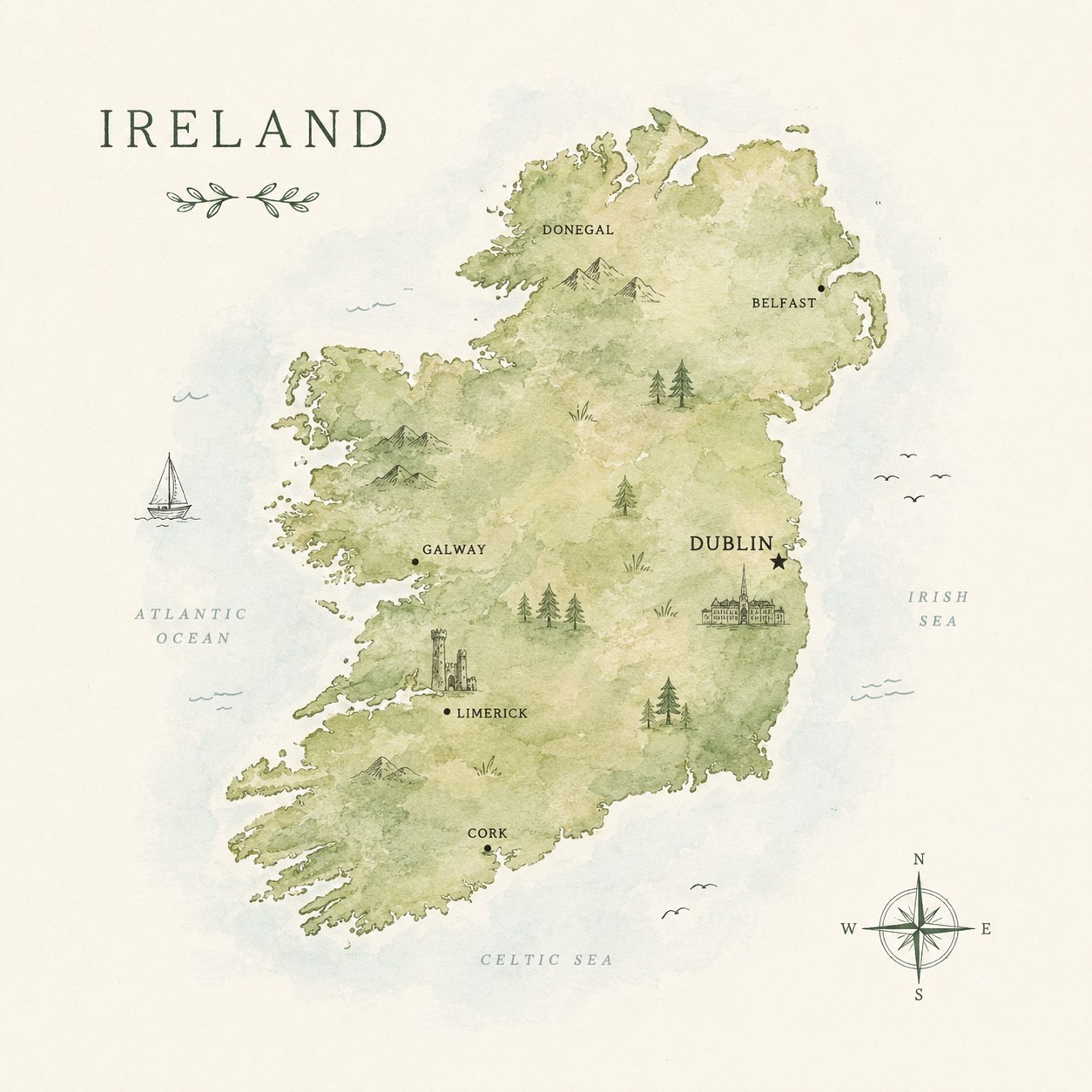
Start with the route, not the sights
For most visitors, a good Ireland trip means fewer bases, less backtracking, no rental car in Dublin, one or two rural scenic days, and backup plans for rain or ferry changes. Start with how many nights you have, choose the region that matters most, then build the attractions around that route.
Best answer
Five days is not a full island loop. Seven days is usually Dublin plus one strong region. Ten days can add a second region if you pace it carefully.
Dublin is better by foot, Luas, bus, DART, and taxi. If you need a car, pick it up after the city stay.
Galway, Cork, Killarney, and Dublin work because they support day trips, transport, food, and easier evenings.
After an overnight flight, plan one gentle area, one flexible meal, and one indoor backup. Save stacked timed tickets for later.
Cliffs, ferries, islands, and mountain roads can change quickly. Do not make one exposed outdoor plan carry the whole day.
Automatic rental cars, popular small-town accommodation, special dinners, and limited timed attractions are the items to secure first.
One-night stops can work before a flight or ferry, but too many turn the trip into packing and parking.
Public transport is useful between cities. Tours are often better for Cliffs of Moher, Connemara, Dingle, and Ring of Kerry if you are not driving.
U.S. visitors can usually visit Ireland visa-free for short tourism stays, but UK connections and side trips can add separate requirements.
Comfortable shoes and a light waterproof layer matter more than a perfect outfit. Wind can make umbrellas less useful on exposed days.
Have your hotel address, airport route, rail times, and backup taxi option saved before landing. Do not rely on airport-brain planning.
The best Ireland trips usually skip a famous place on purpose. That is better than seeing everything tired, late, and through a windshield.
Planning order
| Step | Decision | Why it matters |
|---|---|---|
| 1 | How many nights do you really have? | Arrival and departure days are not full sightseeing days, especially from the U.S. |
| 2 | Which region is the main reason for the trip? | Choose the west, southwest, Dublin, or a no-car city-and-coast route before adding extras. |
| 3 | Will you drive, use trains, or book tours? | This changes where you should sleep and which scenic days are realistic. |
| 4 | What must be booked early? | Accommodation, automatic cars, ferries, special meals, and timed attractions can shape the trip. |
| 5 | What gets cut if weather or energy changes? | A planned cut is better than making bad decisions at 5 p.m. in rain. |
Route choices
Dublin plus one nearby or western base, with departure the following morning. Do not attempt a full Wild Atlantic Way or deep southwest route.
Dublin plus Galway, Clare, or one carefully chosen southwest route. This is where discipline matters most.
Dublin, the west, and either Cork/Kerry or a slower northern add-on can work if you avoid daily hotel changes.
Dublin, Galway, Cork, Killarney, Howth, Cobh, and guided rural day trips are the strongest building blocks.
Related guides
FAQ
Do not overpack the route. Pick fewer bases, leave weather slack, and plan transport before attractions.
Five days can cover Dublin plus one region. Seven days is a strong first trip if you choose carefully. Ten days gives room for a second major region.
Not for Dublin. A car helps in rural Kerry, Clare, Connemara, Achill, Donegal, and flexible scenic routes. Trains and tours can work well for city-based trips.
Skip the second or third faraway region if time is short. It is better to enjoy Dublin plus the west than to rush every famous place.
Yes, if you base in Dublin, Galway, Cork, or Killarney and use day tours for rural scenery. It is harder for remote viewpoints and late rural evenings.
Sources
Choose the trip length
Start with usable days and nights, then choose the region that deserves the time.